

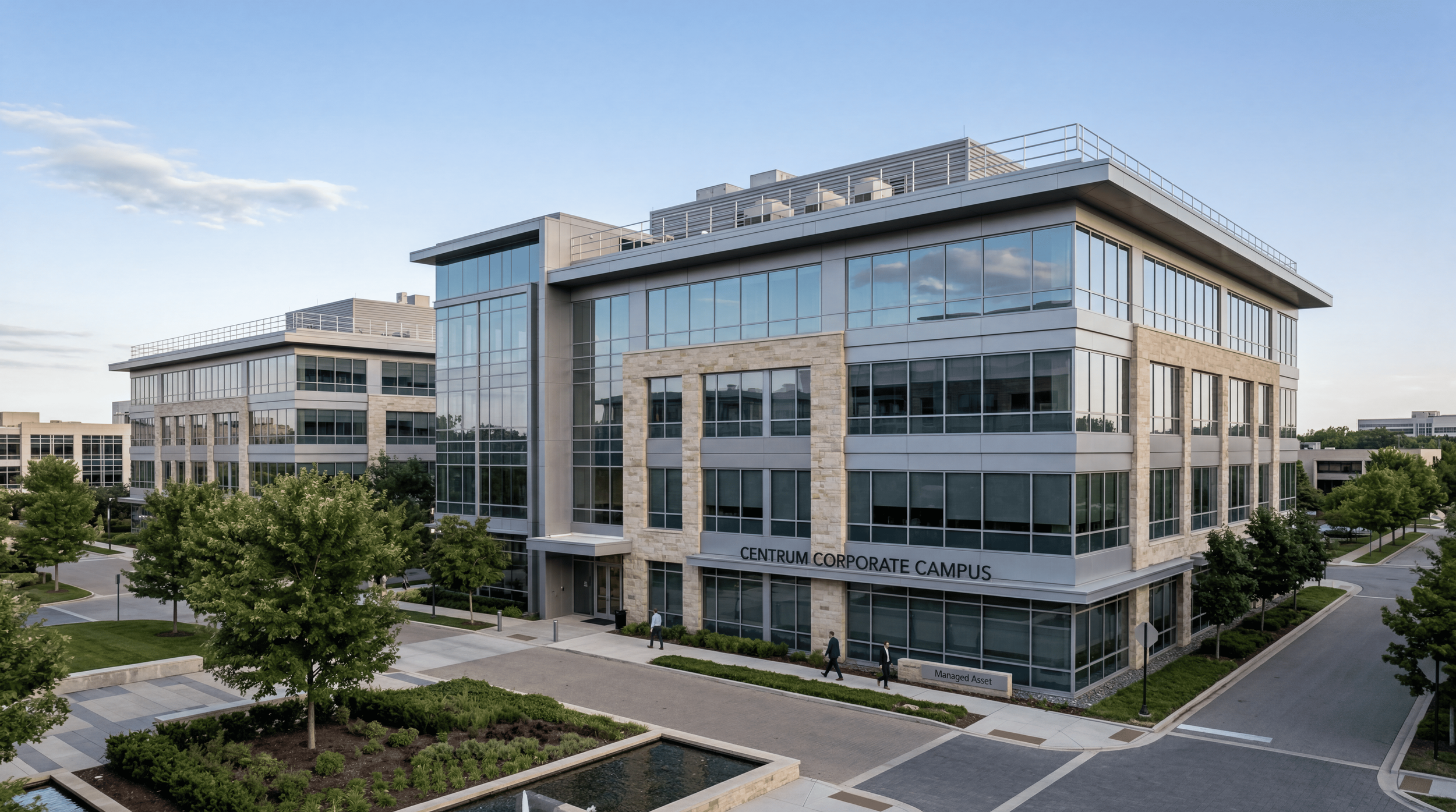
Recurring roof and envelope visibility before decisions become reactive.
Clearline provides structured Roof and Envelope Stewardship for commercial properties and portfolios where ownership needs recurring condition review, documentation, capital planning continuity, and a disciplined path from observation to action.
Ongoing stewardship for commercial roof and envelope assets.
Roof and Envelope Stewardship is a recurring review and documentation engagement for commercial properties where roof and exterior envelope conditions need to be monitored, documented, and managed over time.
RES is typically appropriate when ownership wants more than reactive service calls or one-time inspections. It creates a structured rhythm for condition review, risk tracking, repair prioritization, budget-cycle visibility, and practical documentation.
The engagement helps ownership understand how roof and envelope conditions are changing, what risks are emerging, what work should be prioritized, and where future capital exposure may be building.
Clearline approaches RES with a simple principle: roof and envelope conditions should not be managed only when something leaks.
The objective is to create ongoing visibility before conditions become more disruptive, expensive, or difficult to explain to ownership, boards, lenders, insurers, or internal capital decision-makers.
Common situations that trigger Roof and Envelope Stewardship.
Aging Roof Systems
RES helps ownership monitor later-stage roof systems before conditions accelerate into emergency repairs or unplanned capital needs.
Recurring Leak History
RES provides a structured way to track recurring leak patterns, repair history, and unresolved conditions over time.
Deferred Maintenance
RES helps ownership identify, document, and prioritize deferred maintenance before it becomes harder to manage or budget.
Post-Project Stewardship
RES supports continued oversight after repairs, restoration, replacement, acquisition diligence, or capital planning work is complete.
Budgeting Support
RES provides recurring condition updates to support reserve planning, corrective work decisions, phased replacement planning, and future capital allocation.
Portfolio Visibility
RES helps ownership compare conditions across assets, prioritize capital intelligently, and avoid treating each roof issue as an isolated event.
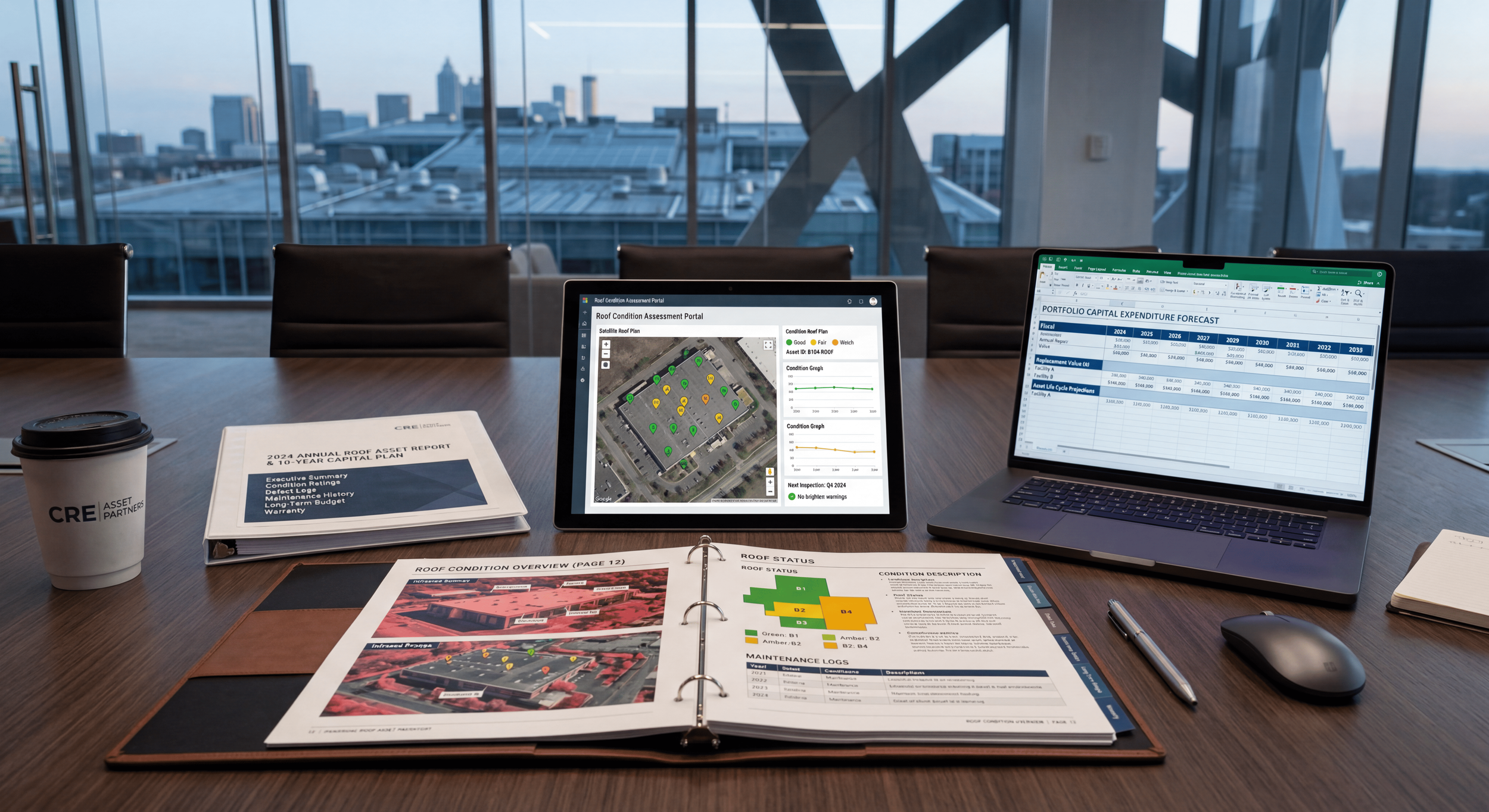
Why stakeholders engage Clearline for Roof and Envelope Stewardship.
Clearline approaches Roof and Envelope Stewardship as recurring condition visibility, not routine maintenance dispatch.
The engagement is built around documentation, trend visibility, lifecycle awareness, and capital decision support. Ownership receives a clearer record of what changed, what remained stable, what requires attention, and what may influence future budget planning.
RES also helps reduce the disconnect between field conditions and capital decisions. Roof and envelope conditions often deteriorate gradually, but ownership decisions happen at specific moments: budget cycles, refinancing events, acquisition reviews, insurance renewals, board approvals, and replacement planning windows.
The purpose of RES is to keep condition intelligence current enough to support those moments.
Recurring asset visibility
Roof and envelope conditions are reviewed on a defined cadence so ownership is not relying on outdated assumptions or reactive service history.
Condition trend tracking
Clearline documents what changed over time, what remained stable, and where deterioration may be accelerating.
Capital planning continuity
RES supports budgeting, reserve planning, repair prioritization, and future replacement timing with clearer condition-based documentation.
Organized action pathways
When issues emerge, ownership has a disciplined path for repair authorization, diagnostic review, paid investigation, phased planning, or capital project consideration.
How RES engagements are structured.
Review property, history, and condition
1.
Clearline reviews the property, roof and envelope history, known issues, prior repairs, existing documentation, operational constraints, ownership expectations, and capital planning needs.
Establish RES structure and reporting cadence
2.
Clearline defines the RES structure, review frequency, documentation standards, reporting expectations, communication rhythm, and pathways for conditions that require follow-up.
Monitor, document, and prioritize next actions
3.
Clearline performs recurring site reviews, tracks condition changes, documents emerging risks, and helps ownership determine what to monitor, repair, investigate, budget, or plan next.
Roof and envelope conditions should be managed before they become emergencies.
Commercial roof and envelope systems often fail slowly before they fail visibly.
Leaks, interior damage, tenant complaints, and emergency repairs are usually late-stage signals. By the time those issues appear, ownership may already be dealing with deferred maintenance, hidden deterioration, budget pressure, documentation gaps, or limited repair options.
Roof and Envelope Stewardship helps shift ownership from reactive response to managed visibility.
That does not mean every condition requires immediate work. Some issues should be monitored. Some should be repaired. Some should be investigated. Some should be budgeted. Some indicate that replacement planning should begin.
Clearline’s role is to help ownership understand those distinctions before urgency forces the decision.
Reporting that remains useful after the site visit.
RES reporting is designed to create continuity over time.
Each review should help ownership understand current conditions, meaningful changes since prior review, emerging risks, recommended actions, and potential capital implications.
Documentation may include condition summaries, issue tracking, photo evidence, priority recommendations, repair history, capital planning notes, and comparison points from prior reviews.
The most important question is not only “What condition is the roof in today?”
The more useful question is “What is changing, what does it mean, and what should ownership do next?”
That is the purpose of RES documentation.
Current condition summaries
Meaningful changes since prior review
Emerging risks
Priority recommendations
Repair history
Capital planning notes
Comparison points from prior reviews
How RES connects to diagnostic, repair, and capital work.
RES can follow a Targeted Roof and Envelope Decision Assessment when ownership needs ongoing monitoring after a specific roof or envelope issue has been evaluated.
RES can support a Capital Planning Engagement by keeping condition information current after portfolio priorities, budget needs, or future capital exposure have been identified.
RES can begin after an Acquisition Property Review when new ownership needs to convert diligence findings into recurring oversight, documentation, and post-close planning.
RES can help track known repair areas, document recurring conditions, and determine when future corrective work or diagnostic review may be needed.
RES can continue after major roof or envelope work to support post-project stewardship, condition tracking, warranty awareness, and future capital planning.
Common questions.
-
No. Maintenance may be part of the broader response, but RES is not simply routine maintenance. It is a recurring stewardship structure focused on condition visibility, documentation, risk tracking, and capital planning support.
-
RES may identify and help organize repair work, but repair execution is typically handled through a defined repair authorization or separate scope. This keeps expectations, pricing, warranty terms, and limitations clear.
-
No. RES can support individual commercial properties, multi-building assets, or larger portfolios. The value is strongest where ownership needs recurring visibility and better capital control over time.
-
The review cadence depends on the property, roof condition, operational sensitivity, ownership needs, budget timing, and capital planning timeline. Many engagements are structured around annual, semi-annual, post-winter, or budget-cycle review periods.
-
Yes. RES is often the next step after an initial decision assessment, planning engagement, diligence review, repair, or replacement project when ownership wants continued visibility after the immediate decision has been made.
Roof decisions are easier when condition visibility is current.
Commercial roof and envelope risk becomes harder to manage when ownership relies on outdated inspections, scattered repair history, incomplete documentation, or emergency-driven decision-making.
Clearline’s Roof and Envelope Stewardship engagement creates a recurring structure for visibility, documentation, prioritization, budget timing, and capital planning support.
The result is not just more information. It is a clearer basis for deciding what to monitor, what to repair, what to investigate, what to budget, and when to plan for larger capital work.