

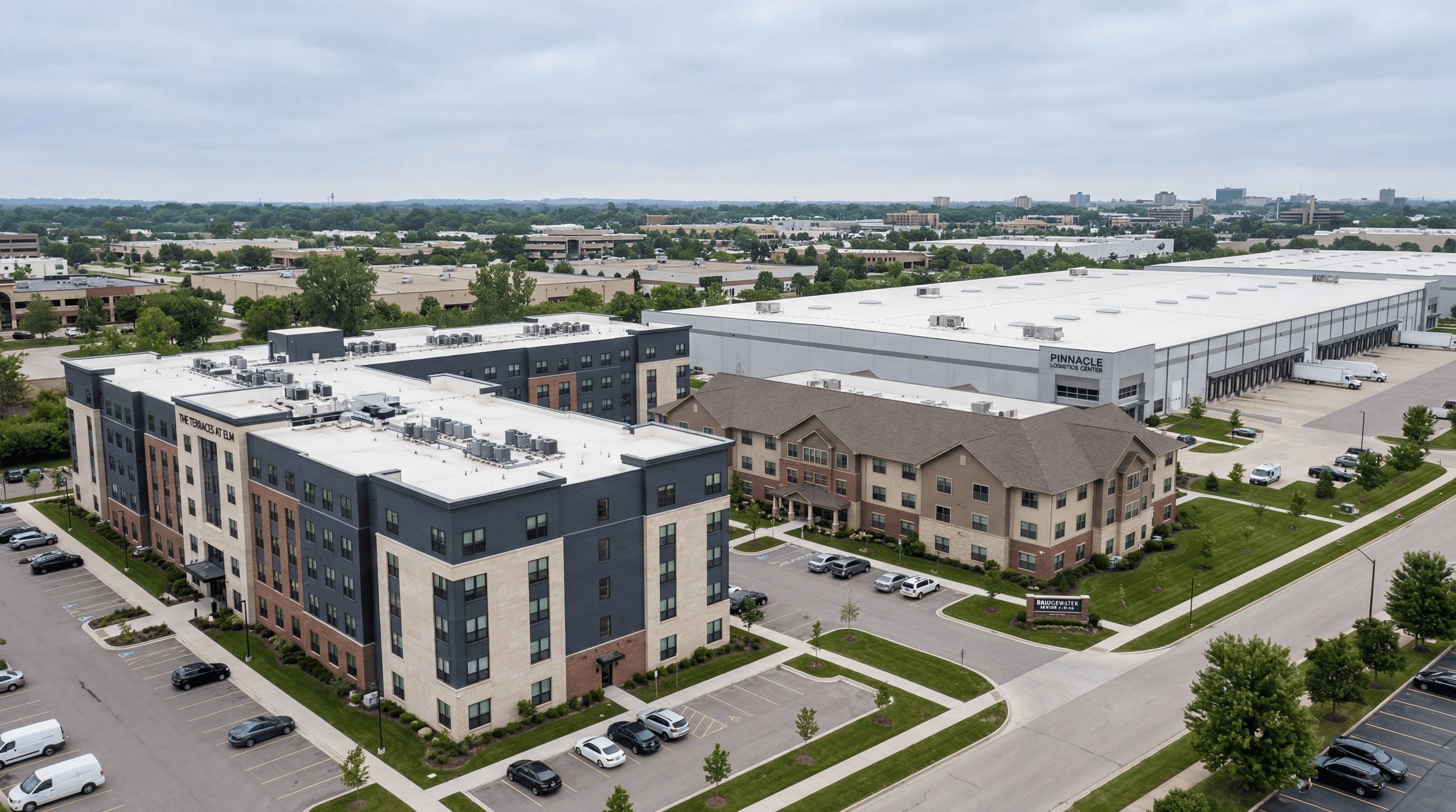
Visibility into roof and envelope capital exposure across the portfolio.
A Capital Planning Envelope Assessment helps ownership and asset management teams prioritize roof and exterior envelope decisions across multiple properties before deferred conditions become budget surprises, operational disruptions, or reactive capital events.
A portfolio-level roof and envelope capital planning engagement.
A Capital Planning Envelope Assessment is a structured multi-property engagement designed to help commercial property stakeholders understand roof and exterior envelope exposure across a defined planning horizon.
Portfolio-level roof and envelope decisions are rarely isolated property issues. They affect reserve allocation, budget timing, capital sequencing, operational continuity, refinancing readiness, ownership reporting, future replacement timing, and long-term asset planning.
Without organized visibility, roof and envelope conditions across a portfolio often become reactive budgeting problems instead of controlled planning decisions.
A CPE is designed to create that visibility before capital pressure escalates or budget windows close.
Common situations that trigger a CPE.
Portfolio Capital Planning
A CPE helps ownership understand future roof and envelope spending across multiple properties, not just one isolated asset.
Capital Prioritization
A CPE helps determine which properties require near-term action, which can be monitored, and which should be budgeted later.
Recurring Repairs
A CPE helps identify where repeated repairs may signal broader lifecycle exposure, deferred maintenance, or replacement planning needs.
Aging Roof Systems
A CPE supports planning when multiple roof systems are reaching later-stage lifecycle conditions and timing needs to be clarified.
Reserve Allocation
A CPE gives ownership clearer documentation to support annual budgeting, reserve planning, lender review, or refinancing discussions.
Portfolio Sequencing
A CPE helps organize roof and envelope exposure across the portfolio so capital can be sequenced by urgency, risk, timing, and execution readiness.
Portfolio-level decision visibility.
The CPE deliverable helps ownership and asset management teams move from fragmented property-level information to organized portfolio-level planning.
Depending on engagement scope, the report may include property condition observations, photo documentation, urgency prioritization, replacement timing, reserve-planning considerations, capital sequencing, deferred maintenance visibility, budget guidance, risk concentration findings, portfolio summaries, and phased planning pathways.
The engagement supports ownership review, budgeting cycles, reserve planning, lender discussions, refinance preparation, capital allocation, asset management reporting, and future repair, stewardship, or phased execution planning.
The objective is not simply to catalog roof conditions. It is to help ownership understand where capital exposure exists, how urgent it is, when it matters, and how it should be prioritized over time.

Why portfolio stakeholders engage Clearline.
A CPE is built around capital planning, budget timing, and portfolio decision-making, not isolated inspection activity.
The engagement organizes roof and envelope conditions across multiple properties into clearer planning and sequencing pathways. It focuses on urgency, timing, reserve exposure, lifecycle visibility, future capital implications, and ownership decision support.
Deliverables are structured for budgeting discussions, ownership review, lender conversations, asset management planning, and future execution planning.
A CPE does not force every condition into an immediate project. It creates clearer direction around what should be repaired, replaced, investigated, monitored, phased, or carried into future budget planning.
Portfolio-level prioritization
Roof and envelope conditions are organized across multiple properties into clearer planning and sequencing pathways.
Capital-oriented planning
The assessment focuses on urgency, timing, reserve exposure, lifecycle visibility, and future capital implications.
Ownership-ready documentation
Deliverables are structured for budgeting discussions, ownership review, lender conversations, and asset management planning.
Controlled future pathways
The engagement creates clearer direction around repair, replacement, stewardship, investigation, and phased execution planning across the portfolio.
How the engagement works.
Initial review
1.
Engagement alignment
2.
Field review and reporting
3.
CPE engagements typically begin with a portfolio-level discussion about property count, asset types, ownership structure, current roof and envelope visibility, reserve-planning pressure, deferred maintenance concerns, budgeting timelines, refinance or lender considerations, operational constraints, and reporting requirements.
Following alignment on objectives, Clearline structures the engagement around portfolio size, prioritization needs, planning horizon, documentation expectations, reporting depth, budget timing, and timeline.
Field review, analysis, and reporting are then completed within the defined engagement structure.
The process is designed to produce a planning asset that ownership can use, not a generic inspection archive.
Typical engagement range.
Most CPE engagements range from $7,500 to $45,000+, depending on the number of properties, property size and complexity, geographic concentration, accessibility, reporting depth, planning horizon, decision timing, and timeline urgency.
Typical delivery is 4 to 12 weeks, depending on portfolio size, geographic distribution, and reporting requirements.
Final fee and timeline are determined during engagement alignment based on the portfolio, the decision context, budget timing, and the level of planning visibility required.
Capital Planning Envelope Assessment
Typical Range: $7,500 to $45,000+
Delivery: 2 to 4 weeks
Expedited delivery available upon request
Common questions.
-
A TREDA focuses on a single property and a specific condition or decision. A CPE focuses on portfolio-level planning, prioritization, budget timing, and capital visibility across multiple properties.
-
No. A CPE is a planning and diagnostic engagement. If future execution is warranted, Clearline can help structure phased repair, stewardship, investigation, or capital project pathways separately.
-
Yes. Many CPE engagements are initiated specifically to support reserve planning, refinancing, ownership reporting, annual budgeting, or lender-related discussions.
-
Not necessarily. Some portfolios require full property-level review across all assets. Others require focused review on higher-risk, later-stage, recurring-problem, or strategically important properties. The engagement structure is calibrated to the portfolio and planning objective.
-
Yes. Many engagements help ownership determine what should happen immediately, what can be phased, what should be investigated further, what should be monitored, and what should be budgeted later.
Better visibility before deferred conditions become capital pressure.
Portfolio roof and envelope conditions become difficult when ownership lacks organized visibility into urgency, timing, prioritization, reserve exposure, and future capital implications.
A CPE is designed to help ownership move from reactive budgeting toward more structured planning, clearer sequencing, and better-informed future execution decisions.