

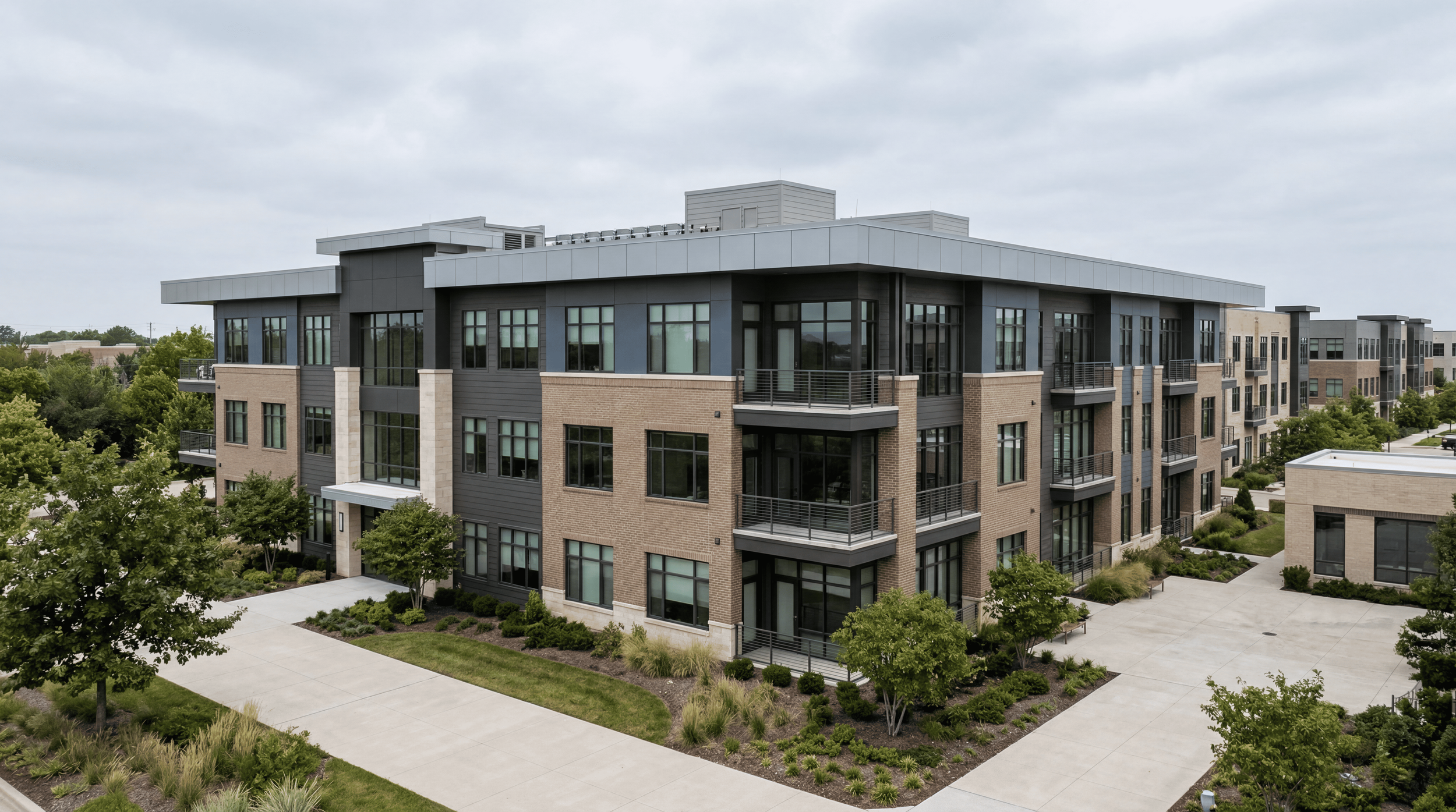
A structured approach to roof and envelope decisions.
Clearline engagements are designed to move commercial property stakeholders from uncertainty, fragmented opinions, and reactive pricing toward clear documentation, defined scope, and controlled action.
Clarity before commitment.
Commercial roof and envelope issues often become expensive when ownership is forced to make decisions before condition, urgency, timing, and long-term implications are understood.
Clearline’s operating approach is designed to create visibility before major scope or capital commitments are made. The work begins by understanding the property, the business driver, the condition, and the decision that needs to be made. If action is warranted, execution proceeds with defined scope, documented assumptions, and a clear next step.
Every engagement follows that logic, whether the situation involves an active leak, recurring repair issue, capital budget, acquisition review, insurance concern, emergency stabilization, or major replacement project.
Property and decision review.
1.
Engagements begin with a conversation about the property, the condition, and the decision the stakeholder is trying to make.
The discussion may involve active leaks, known roof or envelope issues, recurring operational concerns, ownership approval requirements, capital planning pressure, budget timing, lender or transaction deadlines, prior repair history, insurance considerations, urgency, or operational impact.
The goal is not immediate quoting. The goal is determining what level of visibility, documentation, investigation, repair planning, or execution support is actually needed.
Defining the appropriate engagement pathway.
2.
Following the initial review, Clearline aligns the situation with the appropriate engagement structure.
That may involve targeted assessment, portfolio capital planning, acquisition review, paid investigation, service repair, stabilization, phased execution, capital project planning, or recurring stewardship. The right pathway depends on the property, the condition, the timing, the stakeholder environment, and the decision that needs to be made.
Before work begins, the engagement structure, deliverables, timeline, assumptions, exclusions, and next steps are defined clearly.
Clearline does not rely on vague verbal scope assumptions or undefined “we’ll figure it out later” workflows. Scope clarity protects both parties.
Field investigation and documentation.
3.
Field review focuses on documenting conditions in a way ownership and stakeholders can actually use.
Depending on the engagement, Clearline may evaluate roof and envelope conditions, map observed issues, document conditions photographically, classify urgency, assess repair versus replacement considerations, identify lifecycle concerns, evaluate sequencing factors, and note operational risk.
Where visual review is not enough, Clearline may recommend paid investigation before repair, replacement, or capital decisions are finalized.
The objective is not simply identifying visible defects.
The objective is understanding what the conditions mean operationally, financially, and practically.
Decision-ready reporting.
4.
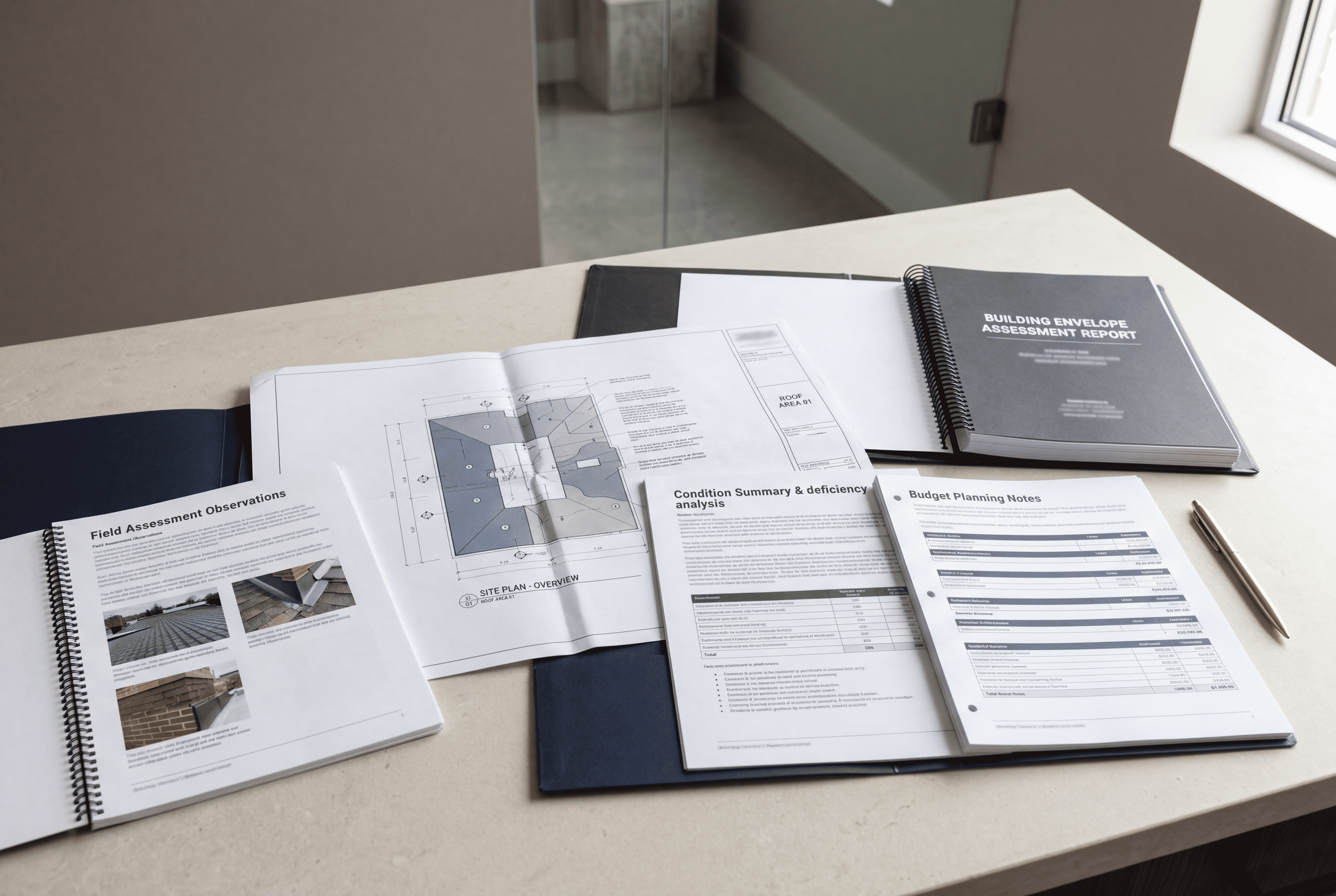
Following field review, findings are organized into structured documentation designed to support real-world decision-making.
Reports may include condition summaries, urgency prioritization, budget-level cost guidance, capital sequencing recommendations, repair versus replacement pathways, transaction-risk observations, reserve-planning considerations, execution recommendations, and future monitoring guidance.
The deliverable is designed to support ownership review, budgeting discussions, lender conversations, insurance review, internal approvals, execution planning, and portfolio decision-making.
The purpose is to create enough visibility for the next decision to be made intentionally rather than reactively.
Controlled execution and ongoing visibility.
5.
If execution is warranted, Clearline converts findings into clearly scoped repair, stabilization, restoration, replacement, or phased capital pathways.
Execution engagements are structured around defined scope, documented assumptions, communication standards, scheduling coordination, change control, warranty structure, safety awareness, and closeout documentation.
Where ongoing visibility is needed, Clearline may recommend recurring stewardship through inspection cadence, condition tracking, maintenance planning, repair history, or portfolio-level monitoring.
The objective is better ownership visibility, fewer reactive decisions, and more controlled execution when work is required.
What clients can expect.
Clearline’s engagement process is built around operational discipline. Clients should expect clear communication around scope, timing, documentation, operational impact, budget considerations, and next steps.
Assumptions, exclusions, and execution pathways are documented before work begins whenever possible. Reports, field observations, repair documentation, change documentation, and closeout records are structured to remain useful after the immediate engagement.
Repair and capital work are approached deliberately, with emphasis on scope clarity, operational coordination, margin-aware execution, and long-term visibility.
Structured communication
Clear communication around scope, timing, documentation, operational impact, and next steps.
Organized documentation
Reports, field observations, change documentation, and closeout records structured for future use.
Defined scope boundaries
Assumptions, exclusions, and execution pathways documented before work begins whenever possible.
Controlled execution pathways
Repair and capital work approached with scope clarity, operational coordination, and long-term visibility.
Better decisions begin with better visibility.
Roof and envelope issues become difficult when ownership lacks clear documentation, realistic prioritization, defined scope, and a practical execution pathway.
Clearline’s operating approach is built to reduce that uncertainty through structured assessment, disciplined documentation, and controlled action.