

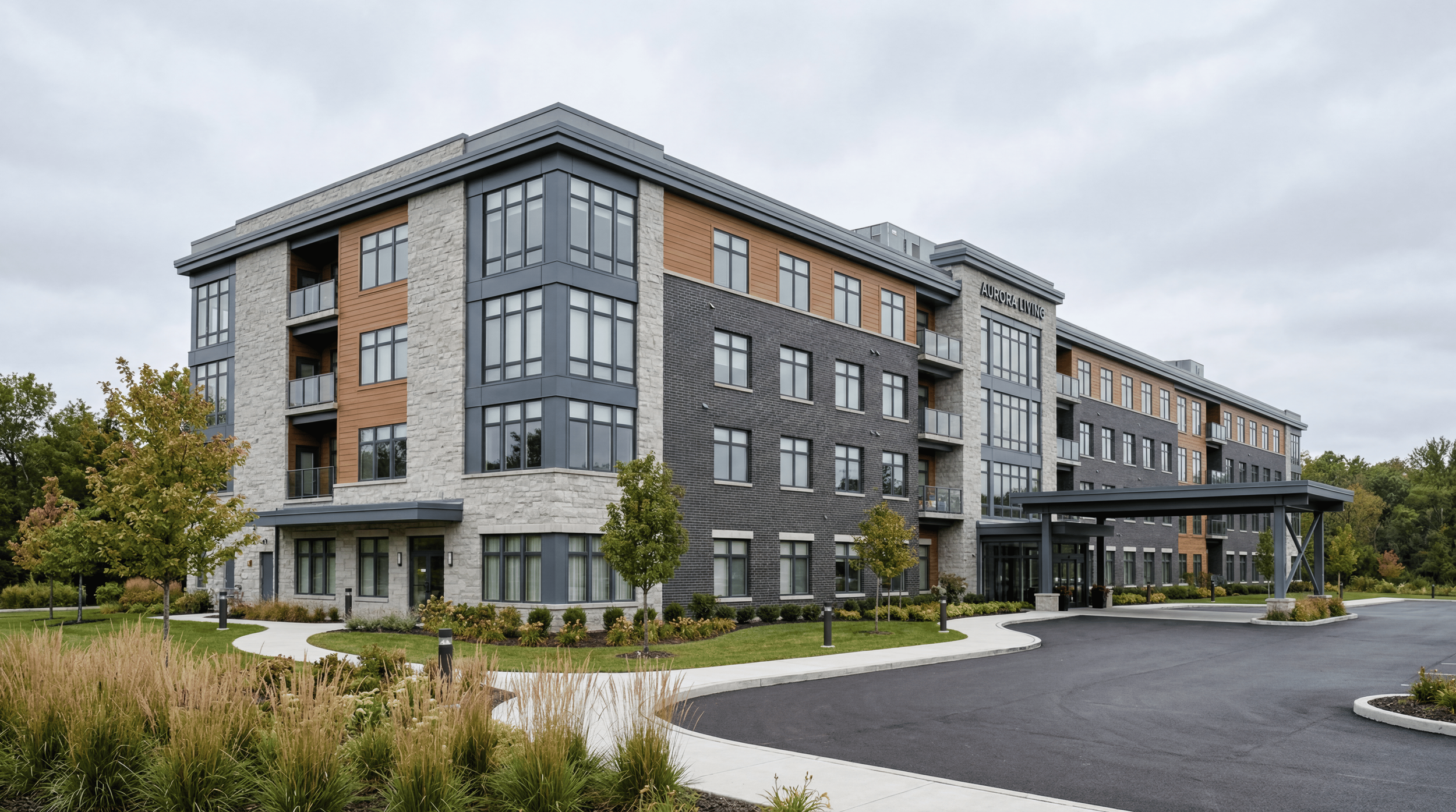
Built around commercial property risk, not commodity roofing.
Clearline Building Envelope is a commercial roof and exterior envelope contractor built to help property stakeholders understand conditions before they become uncontrolled capital exposure, operational disruption, or reactive emergency decision-making.
Commercial roof and envelope decisions are often made with incomplete visibility.
Commercial property owners routinely make roof and exterior envelope decisions involving significant capital exposure, operating risk, tenant impact, insurance complexity, budget timing, and long-term reserve implications.
Too often, those decisions begin with incomplete documentation, conflicting contractor opinions, unclear urgency, or reactive problem-solving after conditions have already escalated.
Clearline was built from direct experience inside those situations.
After years in commercial roofing, repair, restoration, insurance, and capital project work, the need became clear: property teams often need better information before they are asked to approve expensive work.
Clearline exists to close that gap.
The firm helps ownership and management teams understand what is happening, what it means operationally and financially, what level of urgency actually exists, and what decision path makes the most sense before major scope commitments are made.
That path may lead to repair work. It may lead to replacement planning. It may lead to paid investigation. It may lead to recurring stewardship. It may also lead to no immediate action at all.
The objective is clarity before commitment.
A diagnostic-led operating model.
Clearline operates through diagnostic assessment, capital planning support, recurring roof and envelope stewardship, targeted repair, and controlled execution.
Each engagement is structured around the decision the stakeholder is trying to make. For one property, that decision may involve recurring leaks or an aging roof system. For another, it may involve budget planning, acquisition diligence, refinancing, insurance-related conditions, emergency stabilization, phased replacement planning, or portfolio-level capital allocation.
Clearline’s role is to convert field conditions into organized, decision-ready information that ownership can use with confidence.
The work is not built around selling a predetermined scope. It is built around identifying the condition, clarifying the risk, defining the appropriate next step, and executing when the right path is clear.

Why commercial property stakeholders engage Clearline.
Clearline is engaged when roof or exterior envelope conditions require more than a basic contractor opinion.
The firm helps stakeholders clarify conditions before major scope decisions are made. Reports are structured for real-world use by ownership, asset management, property management, lenders, insurers, and capital partners. Recommendations connect physical conditions to timing, reserve exposure, operational continuity, budget planning, and capital prioritization.
When work is warranted, Clearline converts findings into clearly defined repair, stabilization, restoration, replacement, or stewardship pathways with disciplined scope control and documentation.
Condition clarity before scope
Clearline diagnoses conditions before recommending major work.
Capital-aligned thinking
Roof and envelope conditions are connected to timing, budget exposure, operational continuity, and capital prioritization.
Documentation ownership can use
Reports are structured to support budgeting, ownership review, lender discussions, insurance review, reserve planning, and execution planning.
Controlled execution pathways
When physical work is warranted, findings are converted into defined scopes, documented assumptions, and clear next-step pathways.
The operating principles behind the work.
Diagnostic work is treated as professional work, not as a free sales tactic. The purpose is to help ownership make defensible capital decisions with clearer visibility into risk, urgency, timing, and recommended next steps.
1.
Engagements are structured around the decision context. A recurring leak investigation is different from acquisition diligence. A reserve-planning engagement is different from emergency stabilization. A portfolio capital plan is different from a single-building repair scope. The engagement should match the decision being made.
2.
Substantive scoping, pricing oversight, proposal review, and strategic project discussions are handled by qualified leadership. Clients are not routed through a commodity sales process when the issue requires judgment, documentation, and decision support.
3.
Documentation is treated as part of the service itself. Clearline’s work is intended to produce organized records, defined scope boundaries, condition visibility, and clear next-step pathways that remain useful beyond the immediate engagement.
4.
Execution follows clarity. When repair, restoration, replacement, or stabilization work is warranted, Clearline defines the scope, assumptions, exclusions, pricing structure, and documentation expectations before work proceeds whenever possible.
5.
About Clearline Building Envelope.
Clearline Building Envelope is based in Buffalo, NY and serves commercial properties across Western New York.
The firm operates at the intersection of roof and exterior envelope conditions, capital planning, operational continuity, and execution for commercial real estate stakeholders.
Clearline serves multifamily housing, senior living and healthcare-related properties, industrial and warehouse facilities, multi-tenant commercial properties, and regional commercial portfolios.
The company maintains documented operating controls, structured proposal and reporting standards, subcontractor qualification requirements, and organized closeout procedures intended to support long-term ownership confidence and operational consistency.
Start with clarity before scope.
Clearline conversations begin with the property, the condition, and the decision that needs to be made.
Whether the issue involves recurring leaks, reserve planning, acquisition diligence, replacement timing, insurance exposure, or broader envelope risk, the goal is the same: create enough visibility for ownership to move forward intentionally rather than reactively.